

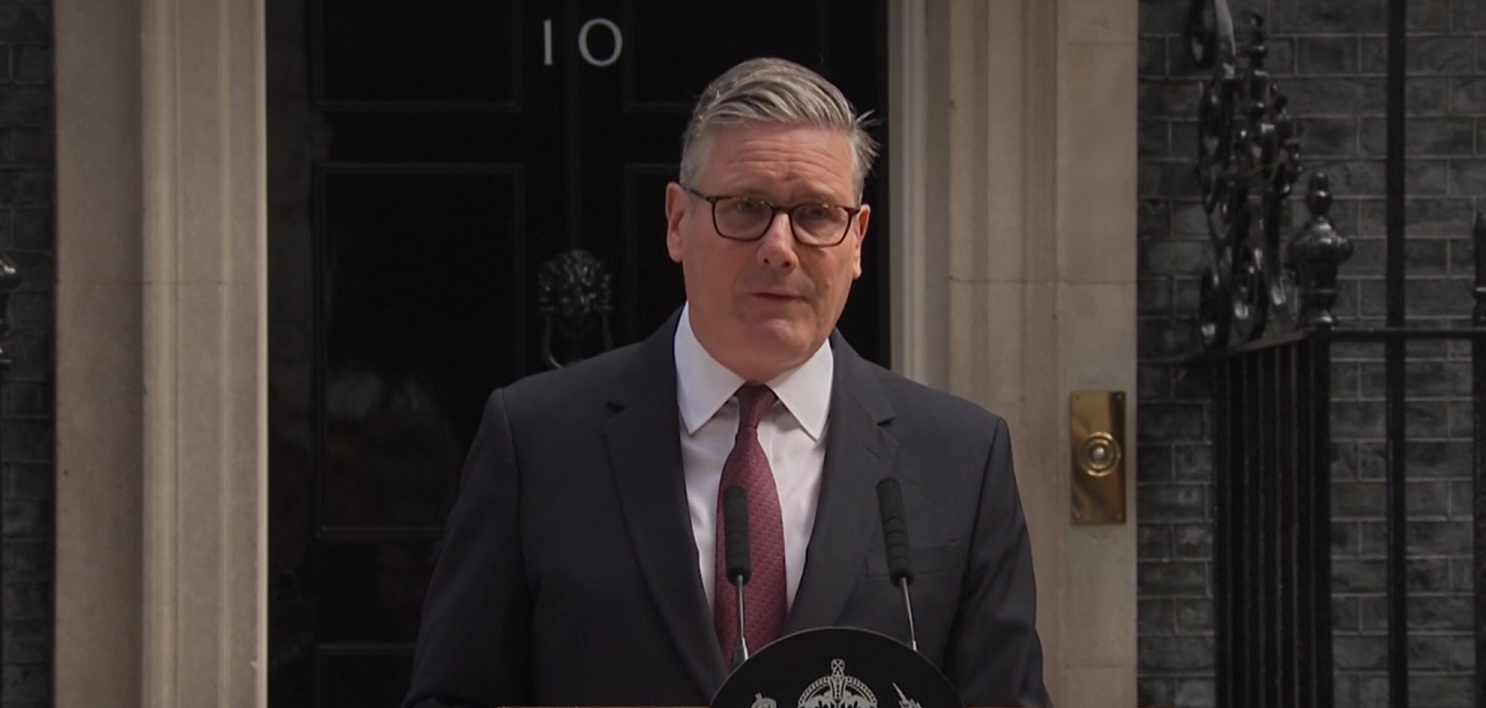
Sir Keir Starmer has announced that he will resign as leader of the Labour Party and leave Downing Street once his successor has been chosen, bringing his premiership to an end less than two years after Labour’s landslide general election victory.
Speaking outside Number 10, Starmer said he had listened to the mood of his parliamentary party and accepted that Labour MPs no longer believed he was the right person to lead them into the next general election. He said he would step aside with “good grace” and support an orderly transfer of power.
The announcement follows weeks of intensifying pressure on his leadership, which sharpened after Andy Burnham won the Makerfield by-election and returned to the House of Commons. Burnham’s victory has made him a likely contender for the Labour leadership, and many at Westminster now see him as the person best placed to succeed Starmer if he can secure sufficient support inside the party.
Starmer said he had informed the King of his decision and would ask Labour’s National Executive Committee to set out the timetable for choosing a new leader. Nominations are expected to open on 9 July. If only one candidate comes forward, the handover could happen quickly, potentially before the parliamentary summer recess. If there is a contested leadership election, the process is expected to conclude before Parliament returns in September.
His departure marks another moment of instability in British politics, with the UK set for yet another change of prime minister within a decade of the Brexit referendum. It also raises immediate questions about the future direction of the government, including whether Rachel Reeves would remain as chancellor under a new Labour leader and whether economic policy would shift under a Burnham premiership.
Starmer used his resignation statement to defend his record in office, pointing to Labour’s return to government, its large Commons majority and what he described as progress on the economy, public services, defence and Britain’s standing abroad. Yet his time in office was increasingly marked by criticism over communication, policy reversals and declining confidence among Labour MPs.
Labour’s 2024 victory was emphatic in parliamentary terms, giving the party more than 400 MPs, although its national vote share was considerably lower than the scale of its majority suggested. That imbalance has remained a recurring feature of political debate, particularly as public dissatisfaction and internal Labour unease have grown.
The leadership process now places Labour at a crossroads. Burnham’s return to Westminster gives the party a possible successor with a high public profile, but a rapid coronation would leave limited opportunity for the public, party members and MPs to scrutinise his programme for government. A full contest, by contrast, would give candidates the chance to explain their plans on tax, public spending, growth, welfare, public services and the wider direction of the Labour government.
Whoever succeeds Starmer will inherit a large parliamentary majority but also a politically fragile position. The next Labour leader will need to restore discipline inside the party, reassure voters, set out a clearer governing message and decide whether the next phase of the government should represent continuity, correction or a more substantial change of direction.
